
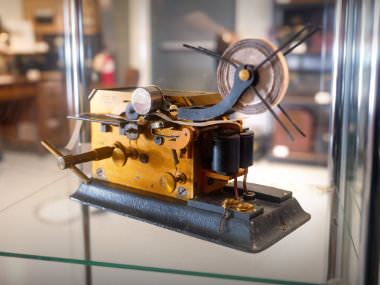
Early wireless & telegraph
From Morse-era telegraph instruments through Marconi’s wireless and the spark-gap age — including marine and early amateur equipment that predated vacuum-tube radio.
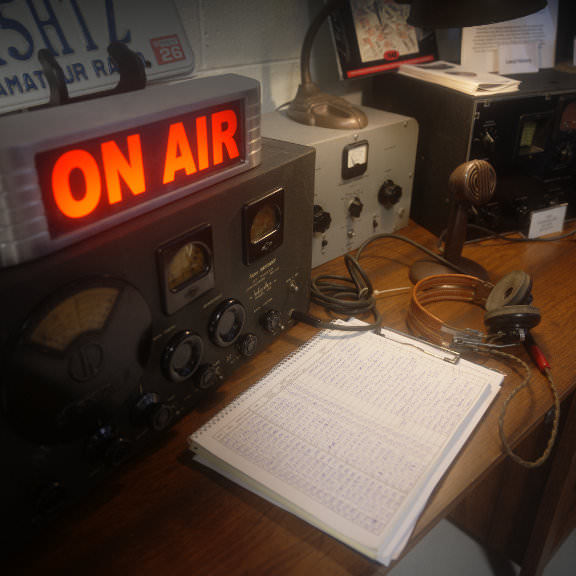
The Golden Age of Radio — now at Keystone
Keystone Truck & Tractor Museum is proud to present the John DeMajo Radio Exhibit, drawn from the celebrated communications collection of the Museum of Yesterday.
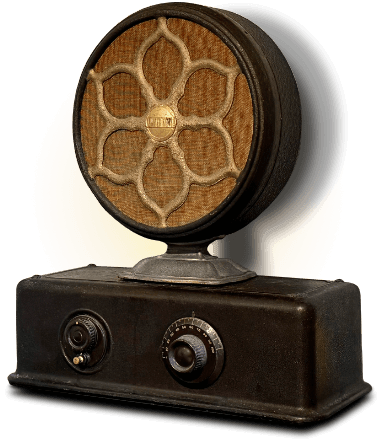
Engineer, historian, and lifelong radio enthusiast John DeMajo (amateur call sign K5HTZ) spent more than six decades assembling one of the most extensive privately held collections of antique and vintage communications equipment in the country. Keystone has acquired that equipment so visitors can experience the story of American radio — from telegraph and early wireless through the “theatre of the mind” years of network entertainment broadcasting.
The exhibit is both a showcase of remarkable machines and an educational journey through the technology that helped unify a nation of many cultures into a shared American conversation.
Long before television, families gathered around the radio for evening entertainment. Network programs of the 1930s through the late 1950s — the so-called Golden Age of Radio — delivered drama, comedy, news, and music into living rooms from coast to coast.
By Thanksgiving week of 1959, major entertainment network radio production was rapidly giving way to television. The sets, microphones, scripts, and station gear from that era survive as tangible pieces of American cultural history — and form the heart of this exhibit.
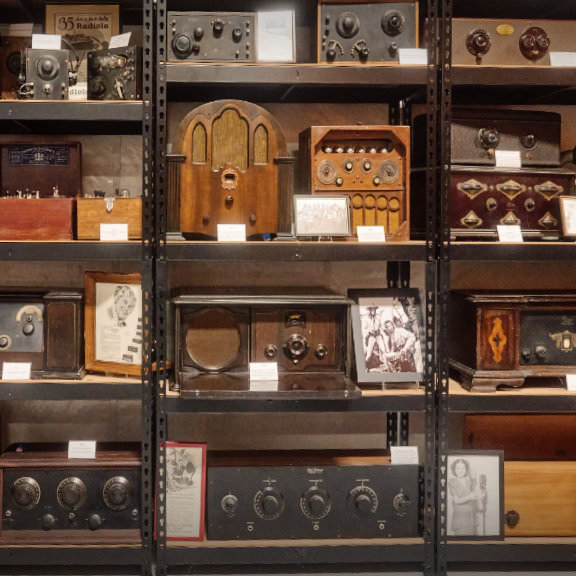
From Morse-era telegraph instruments through Marconi’s wireless and the spark-gap age — including marine and early amateur equipment that predated vacuum-tube radio.
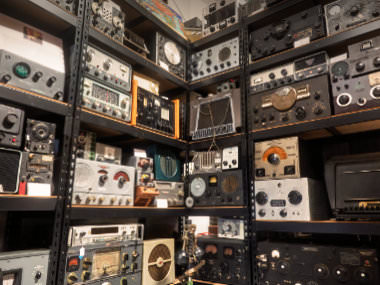
Crystal detectors, “cat whisker” receivers, and early battery-powered tube sets from makers such as Atwater Kent, Crosley, Radiola, Freshman, Grebe, and FADA — the first radios many American families ever owned.
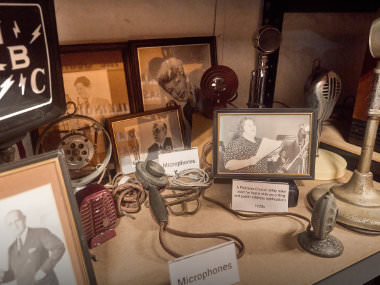
Iconic studio mics of network radio, including the legendary RCA Model 44 and RCA 77DX — the same family of microphones heard on classic NBC programs and seen with stars of the era.